Analysis
Who pays for climate damage? The Supreme Court faces a fight over who gets to decide
Boulder's lawsuit puts local costs against national authority. A less-noticed jurisdiction question could shape what the justices decide.
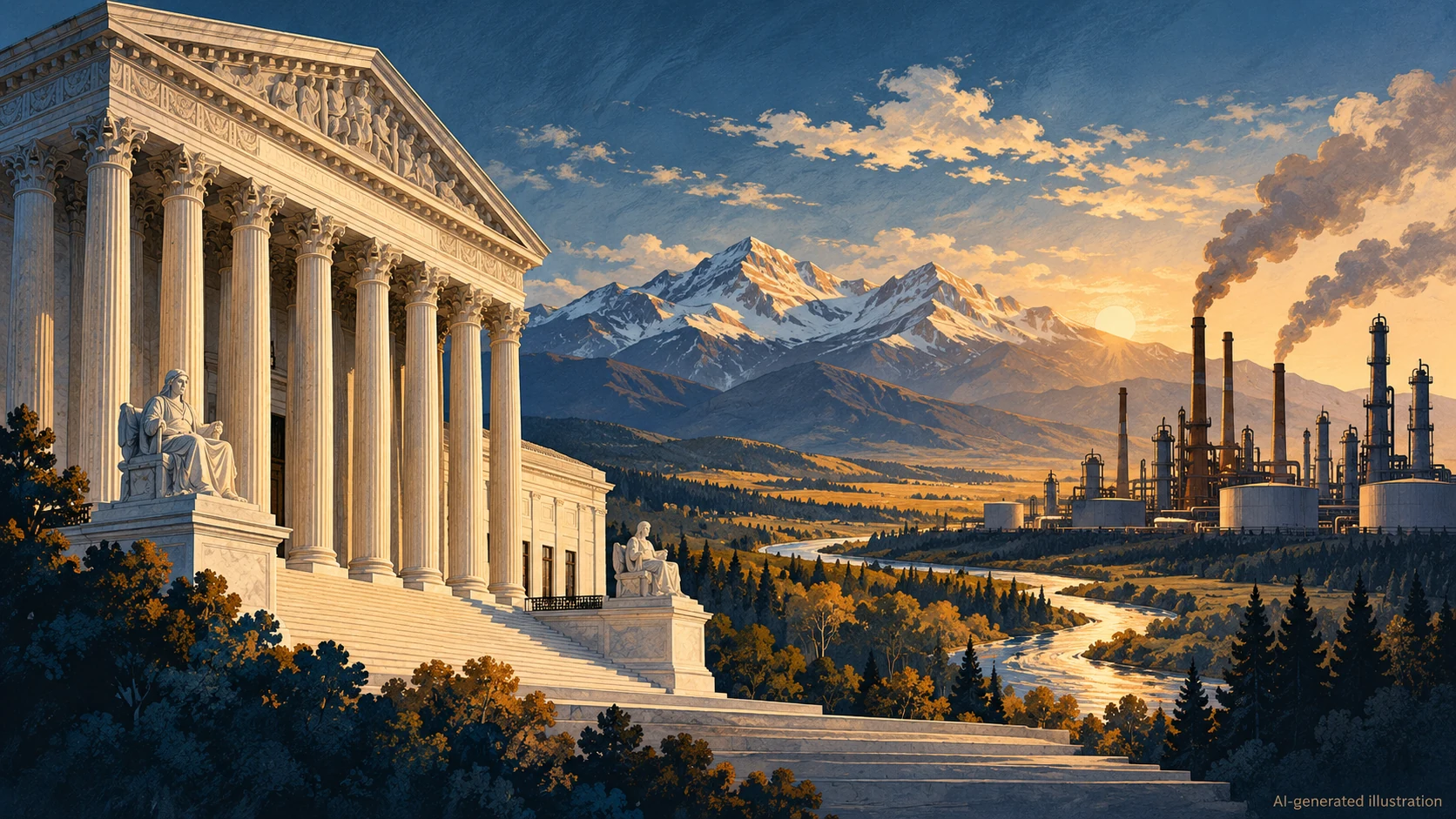
A city can repair a road. It cannot set the world's energy policy. Between those two propositions lies the climate case opening the Supreme Court's new term.
The court has scheduled arguments in Suncor Energy v. County Commissioners of Boulder County for Monday, October 5. Its docket also records that Justice Samuel Alito will no longer participate. The case gives the justices an opportunity to determine how far state law can reach when local governments seek compensation for damage connected to global emissions. [1]
Boulder wants fossil-fuel companies to help pay climate-related costs. The companies contend that those claims cross boundaries that state courts are not entitled to cross. The immediate question is whether this litigation can proceed—not whether the court should award Boulder a particular sum.
Two competing ideas of accountability
In their brief, the energy companies argue that claims involving interstate and international greenhouse-gas emissions belong within a federal legal framework. Their objection is structural: conduct spread across states and countries should not be governed through the liability rules of one state. They also challenge the use of damages claims to accomplish indirectly what a local government could not regulate directly. Those are the companies' arguments, not findings by the Supreme Court. [2]
Boulder's response challenges the premise that federal law eliminates the relevant state-law remedies. Its brief distinguishes a claim for compensation from an effort to directly control another jurisdiction's emissions and disputes the contention that the entire field is beyond state law. [3]
That distinction matters beyond climate politics. A company can support national rules while opposing state-by-state liability. A local government can seek compensation without claiming it should write national energy policy. The difficult question is where one becomes the other.
The procedural twist worth watching
There is another dispute that could receive less attention than the climate arguments: whether the Supreme Court should decide this case at this stage.
Cornell's Legal Information Institute explains that Boulder challenges the court's jurisdiction because the Colorado proceedings have not produced a final judgment. The companies invoke exceptions that can permit review before an entire case ends. Boulder disputes their application and argues that some claims could survive even a reversal. [4]
In practical terms, an argument about who should pay could turn first on whether this is the right moment for the justices to answer.
That is why a narrow procedural disposition would not establish that the companies caused the claimed damage—or that Boulder's legal theory ultimately succeeds.
What is at stake for taxpayers and businesses?
Reuters reports that the litigation seeks money for costs including infrastructure, emergency management and public health, and that the Trump administration supports the companies' position. A broad ruling could influence similar suits elsewhere. [5]
The policy tension is genuine. If communities cannot recover costs through these claims, other funding sources must cover the damage. If expansive claims proceed, businesses could face overlapping legal demands tied to activity far beyond a single jurisdiction.
Neither possibility tells the justices what the law requires. It explains why both local budgets and national economic rules are in the background.
For readers following Monday's arguments, the revealing questions will concern the scope of the proposed rule: which claims it would bar, which it would preserve, and whether the court reaches that issue at all. A hearing is not a verdict, and a ruling about legal authority is not a substitute for proving damages.
Sources
Was this article useful?
Loading feedback…
One current vote per article in this browser. Select your vote again to remove it, or choose the other button to change it. This is reader feedback, not a representative poll.